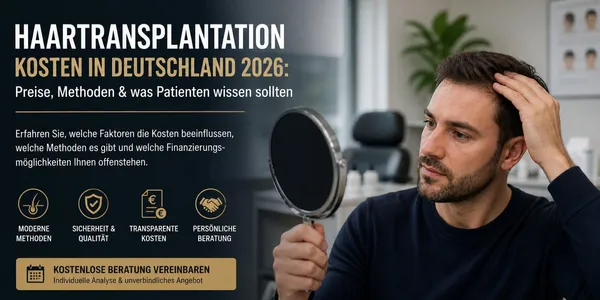


At a glance: A hair transplant in North Rhine-Westphalia typically costs between €2,000 and €10,000, depending on the method and the number of grafts. Modern, minimally invasive techniques such as FUE, DHI, and Sapphire FUE deliver natural, permanent results. The first visible results appear after 3 to 4 months, with the final result visible after around 12 months. The surgeon's experience, the chosen technique, and careful aftercare are the decisive factors for success.
Hair loss affects millions of people, and hair transplantation has established itself as one of the most effective and lasting solutions. Demand has risen noticeably in recent years across North Rhine-Westphalia, with locations such as Dortmund, Düsseldorf, and Cologne. This guide answers the most important questions: from the causes of hair loss and the available methods to the exact procedure, costs, aftercare, and choosing the right clinic.
What Is a Hair Transplant?
A hair transplant is a medical procedure in which a patient's own hair follicles, genetically unaffected by hair loss, are taken from a donor area, usually the back of the head, and transplanted into bald or thinning recipient areas. Because the transplanted follicles retain their genetic resistance to hair loss, they continue to grow permanently.
The technique has changed fundamentally: where earlier procedures were painful and left visible scarring, modern methods now allow minimally invasive procedures with naturally-looking results. A hair transplant is therefore not a purely cosmetic measure but a medical treatment that requires precise planning and professional experience.
Who Is a Good Candidate for a Hair Transplant?
People choose to undergo a hair transplant for a variety of reasons:
- Genetic hair loss (androgenetic alopecia): the most common cause, affecting both men and women, and which can begin at a young age. For many patients, hair loss is a significant psychological burden.
- Hair loss from injuries or medical conditions: scars, burns, or certain medical conditions can lead to permanent hair loss. A transplant can restore coverage to the affected areas.
- Aesthetic corrections: the desire for denser hair, filling in a receding hairline, or refining the hairline are common motivations.
Whether treatment makes sense depends on the stage of hair loss, the quality of the donor area, and individual expectations. A thorough consultation with a specialist clarifies these points.
The Most Important Hair Transplant Methods
FUE (Follicular Unit Extraction)
With the FUE method, individual hair follicles are removed from the donor area using a fine hollow punch and inserted into the recipient area. The advantages:
- Minimally invasive, no linear scar
- Faster healing process
- Quick return to everyday activities
FUE is currently the most requested technique.
DHI (Direct Hair Implantation)
DHI is a further development of FUE. Follicles are implanted directly using a specialized implantation pen (Choi implanter), without the need to open separate channels beforehand. This allows for high density and precise control over angle and growth direction, making it especially suitable for the hairline.
Sapphire FUE
With Sapphire FUE, the recipient channels are opened using blades made of genuine sapphire instead of steel. The smoother, more precise incisions promote faster wound healing and allow for an especially natural, dense arrangement of grafts.
FUT (Follicular Unit Transplantation)
With the older FUT method, a strip of skin is removed from the donor area, from which the follicles are then harvested. It provides a large number of grafts in a short time but leaves a linear scar. Today it is used less frequently.
- FUE: no visible scar, short healing time – suitable for most patients.
- DHI: no visible scar, short healing time – ideal for high density and the hairline.
- Sapphire FUE: no visible scar, short healing time – for an especially natural, dense result.
- FUT: linear scar, longer healing time – suitable for very large areas.
Which method is right for you is a decision an experienced surgeon makes individually during your consultation, depending on your diagnosis, donor area, and goals.
How a Hair Transplant Works: Step by Step
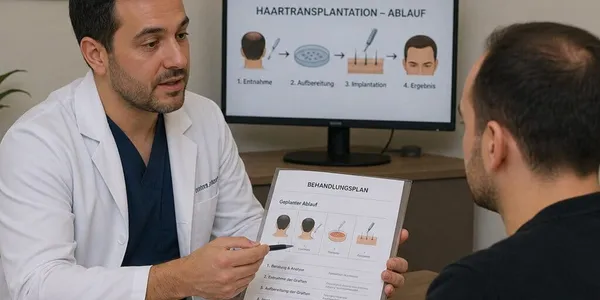
- Consultation and analysis: examination of the scalp, medical history, determining the method and graft count, and discussing realistic expectations.
- Preparing the donor area: the area is shaved and locally anesthetized, so the procedure is largely pain-free.
- Graft extraction: individual follicle extraction (FUE/DHI/Sapphire) or strip extraction (FUT). The grafts are checked for quality.
- Preparing the recipient area: after local anesthesia, fine channels are created following the natural growth direction and density.
- Implantation: the follicles are inserted individually and precisely.
- Completion and aftercare instructions: you receive detailed care guidance for the coming weeks.
The entire procedure usually takes several hours, depending on the number of grafts, and is performed on an outpatient basis.
Aftercare and the Healing Process
Aftercare is crucial for a good result:
- First days: rest, avoid physical exertion, keep the head elevated to reduce swelling. Follow medical care instructions, such as using a special shampoo or ointments.
- First weeks: the shedding of the transplanted hairs, known as "shock loss," is completely normal and part of the natural cycle – no cause for concern.
- After 3 to 4 months: the new hair begins to grow.
- After around 12 months: the final result is achieved.
During the healing phase, protect the scalp from direct sun exposure and avoid harsh care products. Regular follow-up appointments help monitor progress and identify potential complications early.
How Much Does a Hair Transplant Cost in NRW?
Costs depend on the scope of the procedure, the chosen method, the number of grafts, and the surgeon's experience as well as the clinic's facilities. As a guideline, the typical price range in NRW is around €2,000 to €10,000.
Important: the cheapest offer is rarely the best one. A hair transplant is a medical procedure, and an improperly performed operation can lead to unsatisfactory results or complications. So focus not only on price, but above all on quality, experience, and transparency.
Many clinics offer financing or installment payment options. Compare several reputable offers before making a decision. For a detailed cost breakdown, see our separate guide to hair transplant costs in Germany.
Choosing the Right Clinic in NRW
When choosing a clinic, pay attention to the following criteria:
- The surgeon's qualifications and experience, such as training, certifications, and the number of procedures performed.
- Genuine patient reviews and before-and-after results.
- A personal, in-person consultation with honest information about opportunities and limitations.
- Transparent pricing without unrealistic promises.
- Clear information about risks and side effects.
- A good gut feeling – you should feel safe and well cared for.
Risks and Side Effects
Like any medical procedure, a hair transplant carries risks. Common and usually temporary effects include swelling, redness, and mild pain in the donor and recipient areas, which subside within a few days to weeks.
Less commonly, the following can occur:
- Infections, scarring, or uneven hair growth
- Failure of individual grafts to take
Consistently following aftercare instructions and choosing a qualified clinic significantly reduce these risks. If you notice any unusual symptoms, seek medical advice promptly. Overall, when performed professionally, a hair transplant is considered a safe and effective procedure.
Frequently Asked Questions (FAQ)
Is a hair transplant painful?
The procedure is performed under local anesthesia and is largely pain-free. Once the anesthesia wears off, mild discomfort may occur, which can be managed well with pain medication.
When will I see the final results?
The first new hairs grow after 3 to 4 months. The full final result becomes visible after around 12 months.
Are the results permanent?
Yes. The transplanted follicles come from a genetically resistant area and typically continue to grow for life.
How many grafts do I need?
This depends on the extent of hair loss and the desired result, and is determined individually during your consultation.
How much does a hair transplant cost in NRW?
Depending on the method and scope, prices typically range between €2,000 and €10,000.
Which method is best?
There is no universally "best" method – FUE, DHI, and Sapphire FUE each have their strengths depending on the diagnosis and goals. The recommendation is made individually during a personal consultation.
Conclusion
A hair transplant is an effective, permanent solution for hair loss. Experienced clinics and modern techniques are available throughout NRW, delivering natural-looking results. Careful preparation, choosing the right clinic, and consistent aftercare are the decisive factors for success.
If you're considering a hair transplant, take the time for a well-informed consultation. This way, you can make an informed decision for a result you'll be happy with in the long run.
Schedule a free consultation: let our specialists in Dortmund analyze your individual case and receive a personal treatment plan.