
The Fundamentals of Hair Transplantation Explained
Full hair stands for youthfulness, vitality, and self-confidence. But when receding temples appear or the crown thins out, many people look for a permanent solution. In the field of hair restoration, men make up the largest target group – yet more and more women are also showing interest in the procedure. A hair transplant using one's own hair can lastingly transform your reflection in the mirror and restore a renewed sense of confidence.
Nevertheless, this is a surgical, medical procedure. Anyone exploring this topic must inevitably also engage with the subject of hair transplant risks. A comprehensive understanding of the procedure, possible complications, and proper aftercare is essential to achieve the best possible result in the end.
In this article, we provide clarity: we guide you through the entire process, highlight potential pitfalls, and give you practical tips for a smooth recovery.
The Basics: How Does a Hair Transplant Work?
To understand the potential risks, you first need to know the fundamentals. The question 'How does a hair transplant work?' can be answered simply at its core: it is a redistribution of healthy hair follicles from a dense area to a bald area.
But in a hair transplant: where are the hairs taken from? As a rule, the fringe of hair at the back of the head serves as the donor area. The hair follicles in this region are genetically resistant to the hormone DHT (dihydrotestosterone), which is primarily responsible for hereditary hair loss. To ensure that transplanted hair grows for life, this very resistance is put to use.
The Detailed Hair Transplant Procedure
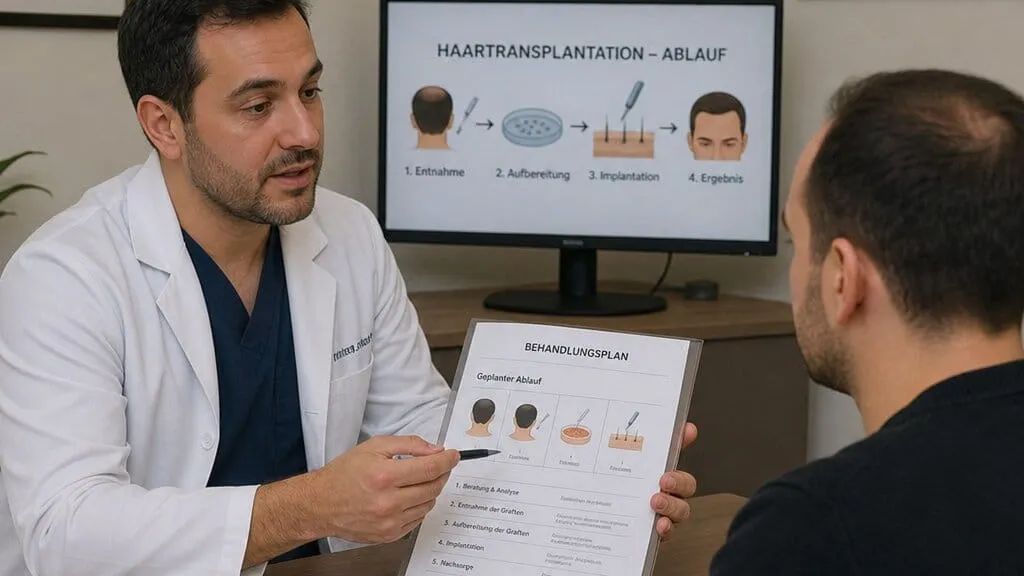
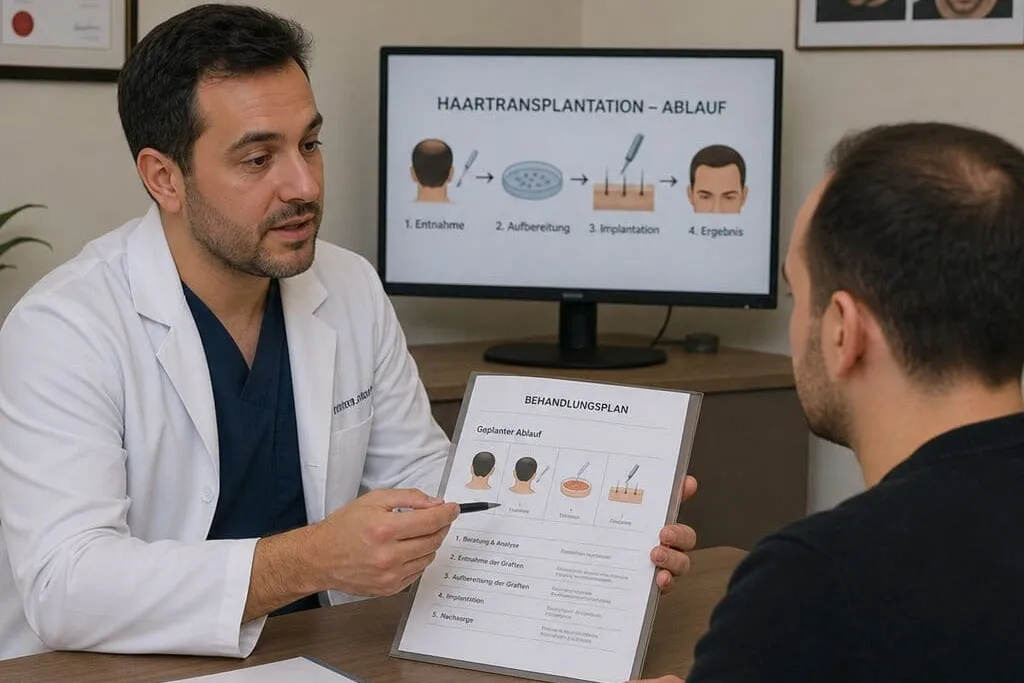
In reputable clinics, the hair transplant procedure follows a strict protocol that demands the highest precision:
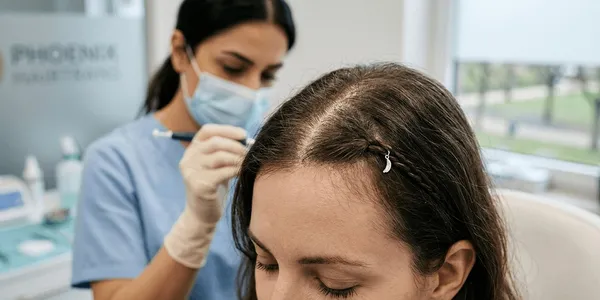
- Consultation and hairline design: The physician draws the new hairline and calculates the number of grafts (follicular unit groups) required.
- Local anaesthesia: Both the donor and recipient areas are locally anaesthetised.
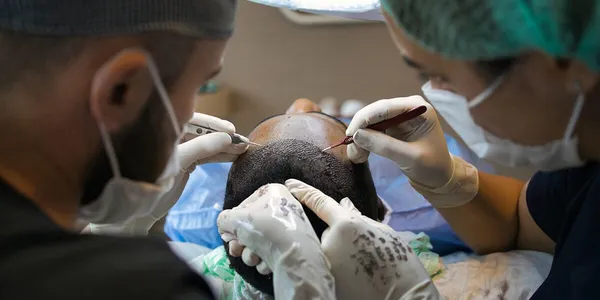
- Graft extraction: The follicles are removed from the back of the head individually or as a strip.
- Preparation: The medical team inspects and prepares the extracted follicles in a nutrient solution.
- Channel opening: Tiny channels (slits) are created in the recipient area.
- Implantation: The grafts are placed in the direction of growth and at the correct density.
Patients often ask: 'How long does a hair transplant take?' Depending on the number of grafts to be transplanted and the chosen technique, the procedure usually takes between 4 and 8 hours.
Techniques Compared: FUT vs FUE Scars
The two most common methods are FUT (Follicular Unit Transplantation) and FUE (Follicular Unit Extraction). On the subject of FUT vs FUE scars, there is one significant difference: the FUT method (strip technique) leaves a fine but often visible linear scar at the back of the head. The FUE method is considered more modern, as the grafts are extracted individually with a hollow needle.
Nevertheless, the assumption that FUE is completely scar-free is a myth. Scarring also occurs with the FUE method – albeit in the form of tiny, dot-shaped micro-scars (white dots) that can be visible on shaved hair but disappear completely and invisibly into the remaining hair at normal hair length.
Medical Hair Transplant Risks and Side Effects
Although the procedure is minimally invasive, there are general and specific side effects following a hair transplant that every patient must be informed about beforehand.
Reactions to Anaesthesia and Swelling
The procedure is usually performed under local anaesthesia. Very rarely, anaesthetic side effects in hair surgery occur, such as allergic reactions, palpitations, or temporary circulatory problems. An experienced anaesthesia team, however, handles such situations routinely.
More common are harmless but bothersome bodily reactions: the injected saline solution and anaesthetics often cause swelling. As these fluids sink due to gravity, facial swelling after the procedure (often in the forehead and eye area) is typical for days 2 to 4.
Tip: Cool the forehead area (not the grafts!) and sleep with an elevated upper body for the first few nights to minimise swelling.
Infections and Circulatory Disorders
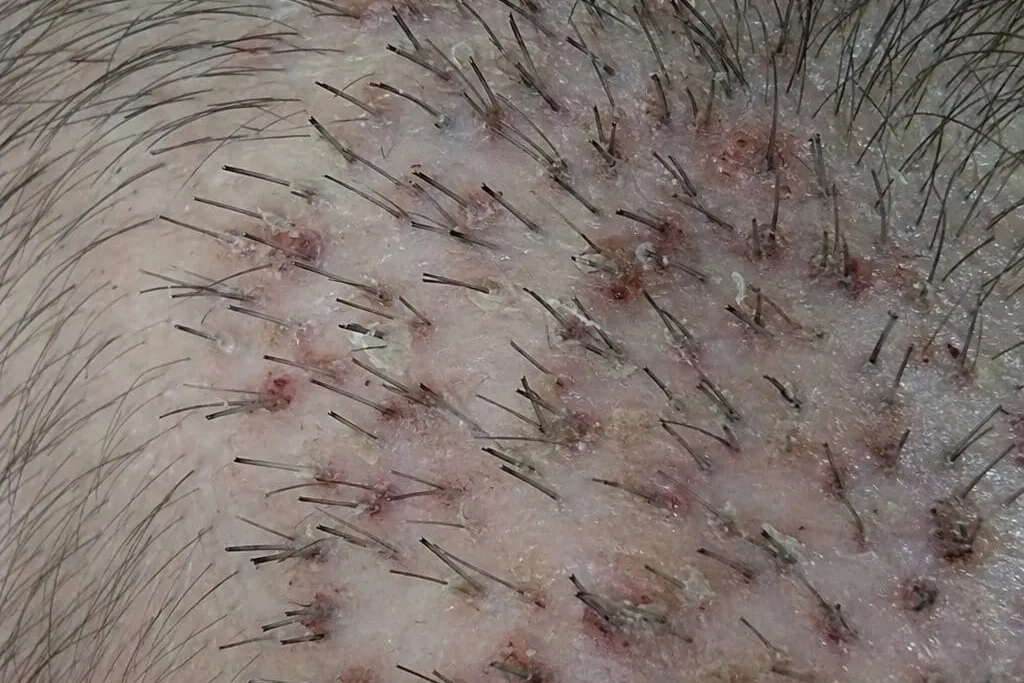
Since small wounds form on the scalp, hygiene is the top priority. Inflammation of the scalp after hair extraction or in the recipient area is possible with inadequate care. Redness, pustules, or severe itching should be reported to the treating physician immediately.
The most feared, albeit rare, risk is necrosis (tissue death). How can necrosis after a hair transplant be recognised? It usually manifests through large-area, deep-black crusting (which differs markedly from normal wound scab), accompanied by severe, throbbing pain in the recipient area. The cause is usually overly dense graft placement (dense packing), which overloads the blood supply to the scalp.
The Natural Healing Process: What Is Normal?
Many patients feel uncertain in the weeks after surgery because the body needs time to recover. Regarding the duration of the healing process after a hair transplant, you should bring patience. The redness and crusts usually disappear after 10 to 14 days. The final result, however, is only visible after 12 to 15 months.
Hair Loss After Surgery: 'Shock Loss'
One of the most common panicked questions is: 'When does transplanted hair fall out again?' The answer is: almost always, namely after about 2 to 4 weeks. This is a completely natural process. The trauma of surgery forces the hair follicles into a resting phase. The hair shaft falls out, but the crucial hair root remains securely anchored in the scalp and produces a new, strong hair after about 3 months.
Sometimes surrounding, non-transplanted hairs also fall out. To prevent or at least minimise this so-called shock loss after a hair transplant, physicians often prescribe special nutrients, minoxidil, or finasteride for pre- and post-treatment. A particularly gentle implantation technique also reduces the trauma to the surrounding roots.
Aesthetic Risks: Avoiding Long-Term Consequences
Besides the health risks, the visual consequences of a poorly performed hair transplant are often the biggest problem for those affected.
The Donor Area: Sometimes Less Is More
The fringe of hair at the back of the head does not have an infinite reservoir of hair. If extraction is carried out too aggressively, it leads to a 'moth-eaten look' (thinned, patchy areas). It is one of the most important tasks of a reputable surgeon to avoid over-harvesting the donor area. An experienced physician never extracts more than 25 to 30 percent of the available grafts in a single session.
The Hairline: Symmetry and Naturalness
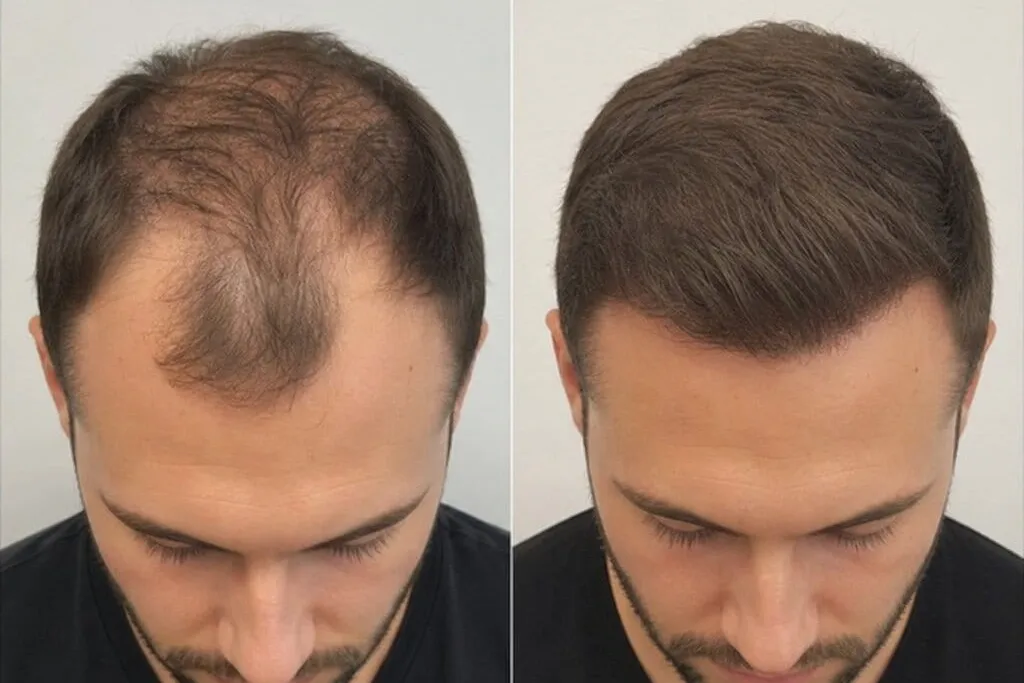
Nothing reveals a poor hair transplant faster than an unnatural, dead-straight, or far too low-set hairline. It becomes particularly problematic when multi-grafts (roots from which 3 or 4 hairs grow) are placed directly on the frontal line.
If an unnatural hairline has to be corrected, this is often complex. It usually requires a revision procedure in which poorly placed grafts are removed by laser or punched out individually, and new, soft single grafts (single hairs) must be placed in front of them.
Finding the Right Clinic: Quality Over Price
Most of the hair transplant risks mentioned can be drastically reduced by choosing an excellent physician. The market is booming, and offers with flat-rate prices beckon every day.
Pay attention to clear quality features of reputable hair clinics:
- Physician presence: The treating physician carries out the planning, the channel opening, and ideally the extraction personally.
- Hygiene and equipment: The operation takes place in sterile, certified operating theatres.
- Transparency: Risks are openly addressed, with no unrealistic promises (e.g. '10,000 grafts in a single session').
- Comprehensive aftercare: The clinic remains reachable for you weeks and months after the procedure.
Beware of Hair-Tourism Traps
You should be especially vigilant with extremely cheap offers at home and abroad. The dangers with budget providers abroad are manifold. Frequently, so-called 'black-market clinics' are not staffed by real physicians but by untrained technicians who process several patients in parallel like an assembly line each day. Here, the rates of infections, over-harvesting, and unnatural results rise exponentially. Do not skimp on your health and your appearance.
Important Aftercare Tips
You yourself contribute a large part to the success of your hair transplant. The right post-operative care instructions for patients are crucial for the grafts to take hold:
- Days 1-3: absolute physical rest. Avoid bumping your head (e.g. when getting into the car).
- Sleeping position: Use a neck pillow to prevent the transplanted areas from touching the pillow.
- Hair washing: Wash your hair from day 3 exactly according to your clinic's instructions (usually with a special lotion that softens crusts and a mild baby shampoo). Never rub!
- Sport and sweating: Refrain from intensive sport, sauna visits, and swimming pools for at least 2 to 4 weeks. Sweat can flush bacteria into the wounds, and chlorine attacks the sensitive fresh wounds.
- Sun protection: Direct sunlight on the unprotected scalp must be strictly avoided for 3 to 6 months, as it can lead to pigmentation disorders and scar discolouration. After consulting your physician, wear a loose bucket hat or a cap.
Conclusion: Well-Informed on the Way to a New Head of Hair
For many of those affected, a hair transplant is a life-changing procedure that can give back an enormous amount of quality of life. But as with any medical procedure, there are hair transplant risks here too, which should neither be ignored nor dramatised.
Anyone who understands the detailed procedure, sets realistic expectations of the healing process, and prioritises absolute quality when choosing a clinic minimises the dangers of infections, unnatural results, or damage to the donor area. If you also take aftercare seriously and give your body the time it needs to regenerate, nothing stands in the way of the dream of full, natural-looking hair.