


PRP (Platelet-Rich Plasma) Therapy
Activate your hair growth naturally with your body’s own plasma.
Book Consultation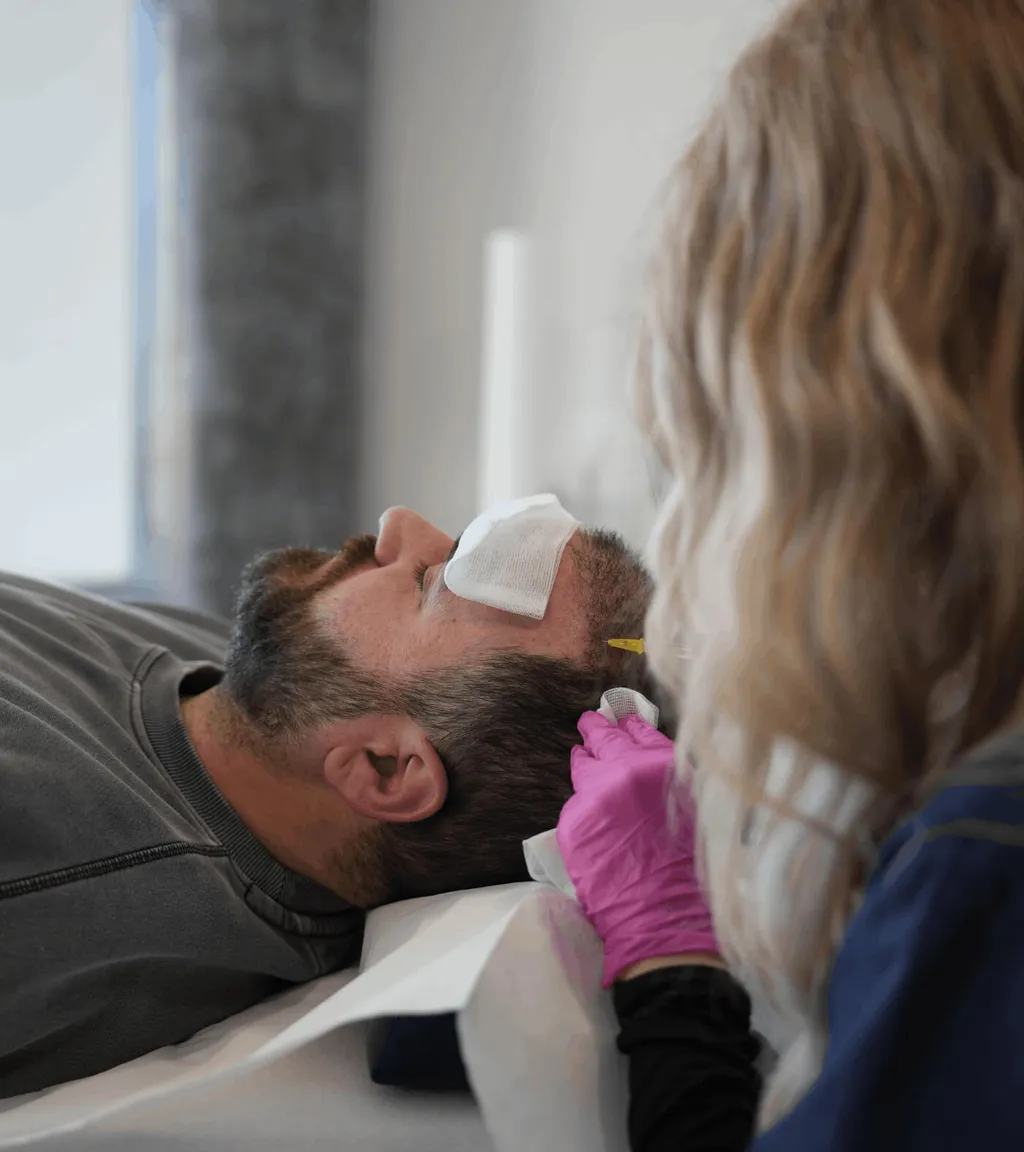
Treatment
PRP (Platelet-Rich Plasma) is a natural autologous therapy that harnesses your body’s healing potential. The plasma contains growth factors that stimulate hair follicles and rejuvenate the scalp.
How does it work?
Platelet-rich plasma is isolated from your blood and injected into the scalp. The growth factors activate dormant hair follicles.
What are the benefits?
Natural, low-risk, and effective · Increases hair density · Reduces hair loss · Supports healing after hair transplantation.
Who is suitable?
Patients with early-stage hair loss, thinning hair, or as a supportive treatment after hair transplants.
Results
Less hair shedding after 1–2 months · Noticeable thickening after 3–6 months.
Treatment duration: Approx. 45–60 minutes
Discomfort: Low
Recovery: Immediate
Preparation & Aftercare
How should I prepare?
Stay well hydrated before treatment. Avoid alcohol and blood-thinning medication the day before.
What should I do after treatment?
Avoid washing your hair for 24 hours. Avoid sun exposure, sauna, and exercise for 1–2 days.
How often should PRP be done?
Usually 3–4 sessions spaced 4 weeks apart, with maintenance treatments every 6–12 months.

FAQ
Do you have more questions or would you like to learn more?
Contact usWhat is PRP (Platelet-Rich Plasma) therapy?
A small amount of blood is drawn, processed, and the platelet-rich plasma is injected into the scalp to stimulate hair follicles through natural growth factors.
How does the treatment work?
After blood collection, the plasma is centrifuged to concentrate growth factors, then injected into the scalp using fine needles.
When will I see results?
Hair shedding typically decreases after 1–2 months. Fuller hair growth is visible after 3–6 months.
Is PRP painful?
The injections are well tolerated. A numbing cream can be used if desired.
Who is PRP suitable for?
Men and women with mild to moderate hair loss or thinning hair, and as a post-transplant booster therapy.
Book a comprehensive hair consultation!
Book consultation